



Solar-Powered Signage: A Smart Investment for Smarter Cities
4 June 2025 3 min read
With the growing demand for sustainable urban planning, solar-powered signage is quickly becoming more than a trend—it’s a smart, long-term investment. Whether used for wayfinding, public realm improvements, or commercial branding, solar-powered signs offer an energy-efficient solution that performs just as well as traditional illuminated systems.
But beyond just looking good and working at night, what makes solar signage such a practical choice in 2025?
Let’s explore.
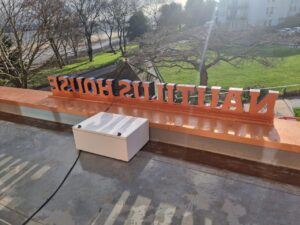
Why solar-powered signage is on the rise Councils, developers, and businesses are increasingly under pressure to meet environmental targets—and signage is a surprisingly easy win. Solar technology has advanced massively in recent years, with better battery storage, more efficient LED systems, and smarter light sensors.
The result? Signs that light up only when needed, draw zero energy from the grid, and operate with minimal maintenance.
Key benefits of solar signage:
Applications in real-world environments Solar-powered signage isn’t just for remote areas. We’re seeing it installed in city centres, housing developments, transport hubs, and community spaces—especially where running electricity underground would be disruptive or expensive.

Wayfinding totems, welcome signs, and public information panels are ideal candidates. These are signs that need to be visible 24/7, often placed outdoors in high-traffic areas where sunlight is abundant. With the right design and placement, solar-powered signage delivers on both performance and sustainability.
Design considerations To get the most out of solar-powered signage, it’s not just about slapping on a panel. You need to:
At IS Group, we design and manufacture solar-ready systems in-house, ensuring that both form and function are built into every sign. We also test performance on-site to make sure installation locations support maximum energy absorption.
Looking ahead As cities become more connected and sustainability expectations rise, solar-powered signage will play an even bigger role in smart city design. It’s a simple, effective step that blends design innovation with environmental responsibility.
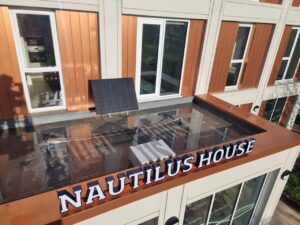
Ready to explore solar signage options for your next project? Have a browse through our product range and recent case studies to see what’s possible.
Signage works hard during the day… but what happens when light levels drop? From darker winter afternoons to 24-hour sites and busy evening environments, visibility quickly changes. This is where...
Read articleIn busy environments, clear signage plays a crucial role in helping people navigate spaces quickly and confidently. Freestanding signage structures – commonly referred to as monolith signs or totem signs...
Read articleIndustrial estates are busy, high-functioning environments. HGVs manoeuvre through shared access roads; delivery drivers search for unit numbers under time pressure, visitors arrive for meetings, staff move between warehouses, offices...
Read article